
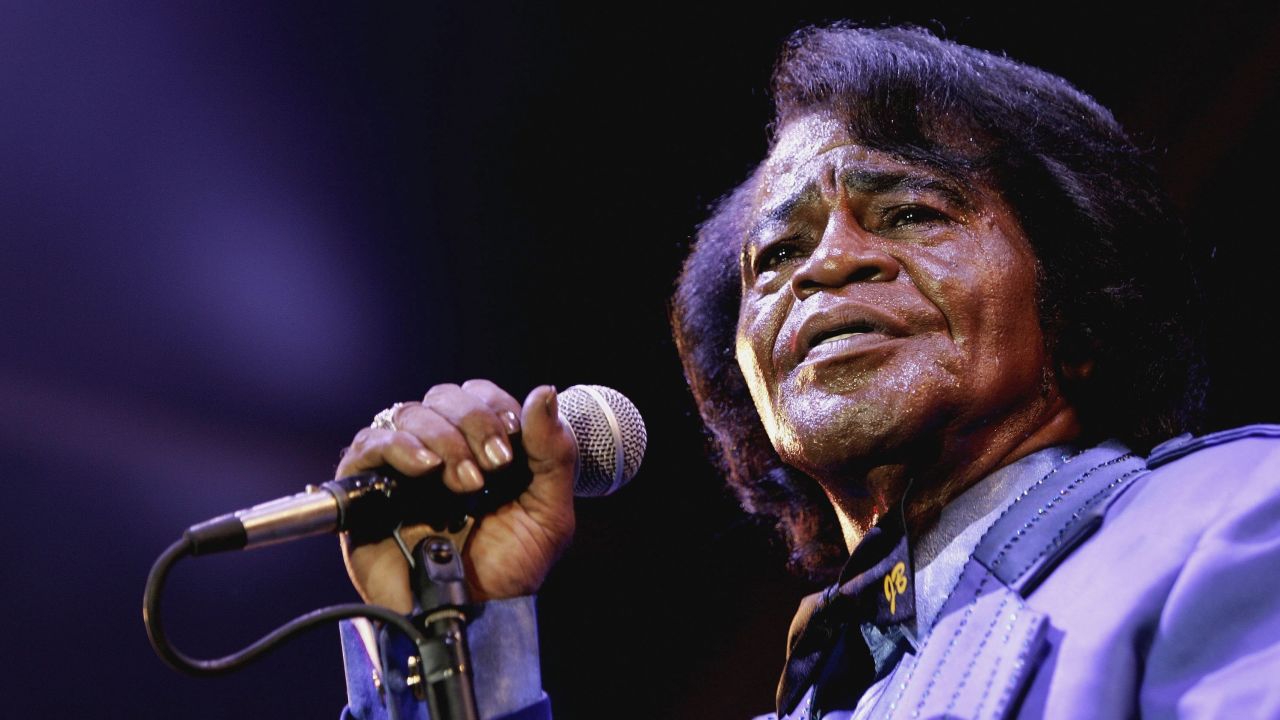
Biography
Full name: James Joseph Brown
Date of birth: 3 May 1933
Place of birth: Barnwell, South Carolina, United States
Date of death: 25 December 2006
Occupation: Singer, songwriter, bandleader, producer
Genres: Funk, soul, R&B, gospel, blues, jazz
Childhood and Hardships
James Brown was born into poverty in a small town in South Carolina. He lost his father at a young age and was raised by his aunt after his parents separated. His childhood was marked by neglect and periods of wandering. However, from a very young age, Brown showed a deep interest in music and dance. As a teenager, James Brown was sent to prison for petty offences. It was in prison that he honed his musical talents. After his release, he turned to gospel and began singing in church choirs, before moving on to secular music.Rise to Fame and the Birth of Funk
In the 1950s, James Brown began to make a name for himself in the music world. He joined the group The Famous Flames and quickly became the star of the band. His first major hit came in 1956 with ‘Please, Please, Please’, which marked the start of his career. In the early 1960s, Brown began to revolutionise music with his unique approach to rhythm and instrumentation. His songs, such as Papa’s Got a Brand New Bag (1965) and ‘I Got You (I Feel Good)’ (1965), signalled the emergence of funk. His style is characterised by tight rhythms, complex brass arrangements and a particular emphasis on the ‘one’ — the first beat of each bar — a hallmark of funk.The Funk Revolution
James Brown became the founding father of funk, a genre that would profoundly influence jazz, rock, hip-hop and pop. His 1967 album, *Cold Sweat*, marked a turning point in music history with its innovative use of rhythm and simplicity. Brown focused on powerful grooves and minimalist melodies, which helped funk emerge as a distinct genre. Among his iconic tracks are:- ‘Sex Machine’ (1970)
- ‘Super Bad’ (1970)
- “Get Up (I Feel Like Being a Sex Machine)” (1970)
- “The Payback” (1973)
Soul and Political Influence
James Brown did not merely make music; he was also a major figure on the social and political scene. His songs served as a voice for the African-American struggle in the 1960s and 1970s. “Say It Loud – I’m Black and I’m Proud” (1968) became an anthem of the civil rights movement, expressing Black pride and empowerment. Through his music, Brown sought to instil dignity and pride in the Black community, and his influence extended far beyond music. His unwavering work ethic, independence and commitment to his art made him a significant figure in American culture.Later Career and Legacy
In the 1980s and 1990s, although his popularity had waned in the mainstream charts, James Brown remained a key figure in music. Despite health problems, including a battle with drug addiction, he continued to perform live and tour around the world. He received numerous honours, including:- Two Grammy Lifetime Achievement Awards
- Induction into the Rock and Roll Hall of Fame (1986)
- Numerous Grammy Awards and nominations