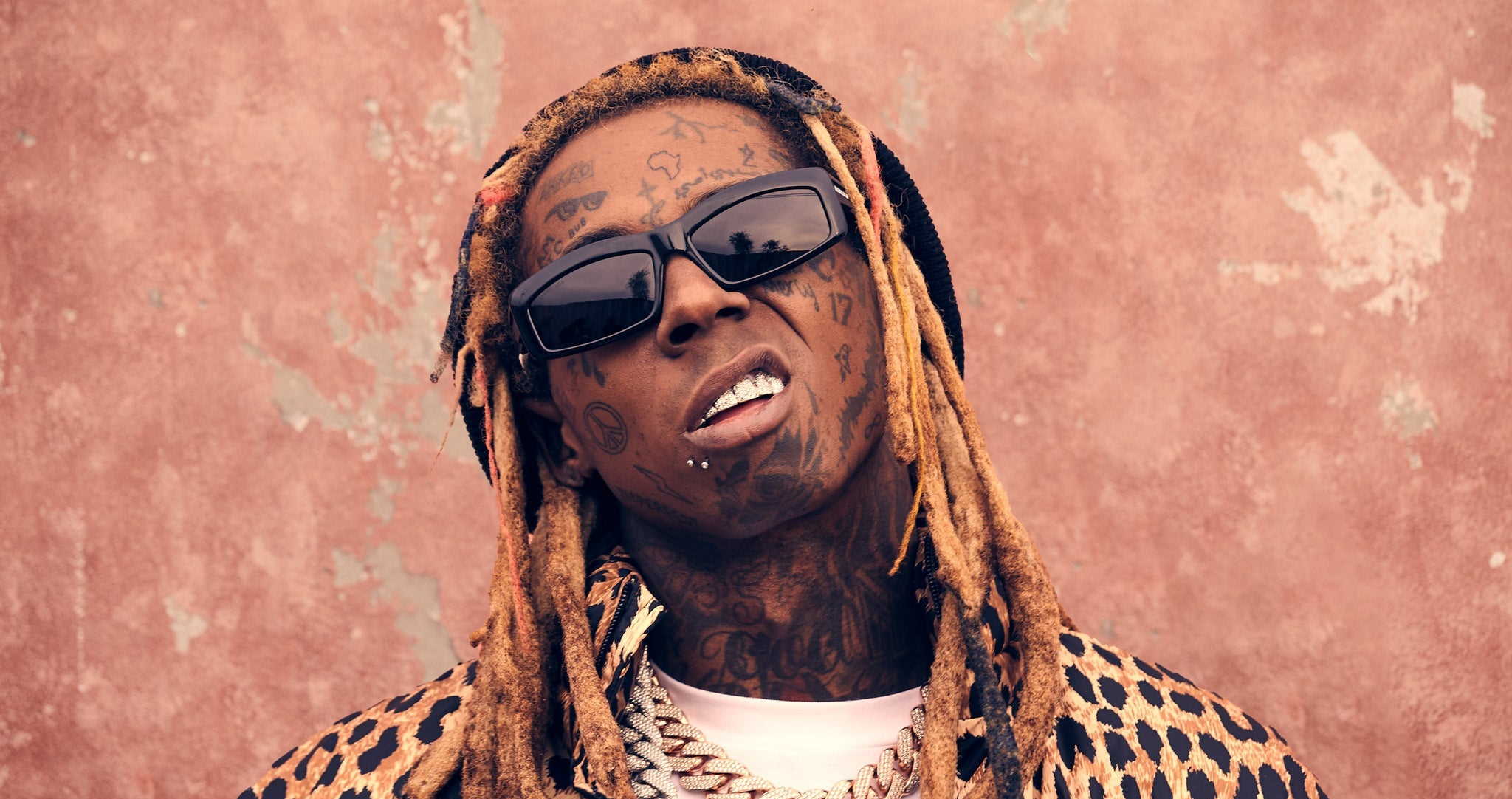
Biography
Lil Wayne (whose real name is Dwayne Michael Carter Jr., born on 27 September 1982 in New Orleans, Louisiana) is one of the most influential and acclaimed rappers in the history of hip-hop. Known as ‘Weezy’ or ‘Tunechi’, he has left his mark on the music scene with his unique style, boundless creativity and influence on subsequent generations of rappers. Lil Wayne is renowned for his exceptional lyrical skills, innovative flows and ability to blend different musical genres.
Musical career
Lil Wayne grew up in the Hollygrove neighbourhood of New Orleans. He began rapping at a young age, and at just 9 years old, he signed to Cash Money Records after impressing the label’s founder, Bryan “Birdman” Williams. At that age, he became the youngest member of the Hot Boys collective and made his debut on the group’s first album in 1997. However, it was his first solo album, *Tha Block Is Hot* (1999), that truly launched him into the world of hip-hop.
His rise to fame was meteoric following the release of *Lights Out* (2000) and *500 Degreez* (2002), but it was with the release of *Tha Carter* in 2004 that Lil Wayne truly made his mark on the music industry. The album was a critical and commercial success, featuring tracks such as Go DJ and ‘Bring It Back’. However, it was with *Tha Carter II* (2005) that he cemented his place amongst the best rappers of his generation, showcasing his distinctive style, notably his innovative use of Auto-Tune and his complex rhymes.
The era of mixtapes and global success
One of the most memorable periods of Lil Wayne’s career was his mixtape era, during which he released a series of projects that cemented his reputation as an “unstoppable rapper”. Mixtapes such as *Dedication* (2004), *Da Drought* (2004) and *The Drought Is Over* (2007) demonstrated his incredible productivity and his ability to reinvent the genre.
In 2008, Lil Wayne released Tha Carter III, a groundbreaking album that is often regarded as one of the greatest hip-hop albums of all time. Featuring iconic singles such as A Milli, Lollipop and Got Money, the album was a massive commercial and critical success, propelling Lil Wayne to the very top of the global hip-hop scene. *Tha Carter III* won several Grammy Awards, including Album of the Year, and marked the beginning of a new era for rap.
His next album, *Rebirth* (2010), explored rock influences and alternated between rap and experimental rock, demonstrating Lil Wayne’s desire to push musical boundaries. At the same time, Lil Wayne continued to release mixtapes such as *No Ceilings* (2009), which were well received by fans and critics alike.
Career after *Tha Carter III* and influence
Following Tha Carter III, Lil Wayne cemented his superstar status with projects such as Tha Carter IV (2011), which was also a huge commercial success, and collaborations with other artists such as Drake, Nicki Minaj and Jay-Z. However, the release of Tha Carter V was delayed several times due to legal disputes with his label, Cash Money Records. The album was finally released in 2018 and proved a huge success, featuring tracks such as Mona Lisa and ‘Uproar’.
As well as his solo albums, Lil Wayne has been a major figure in promoting young talent. He has discovered and supported artists such as Drake, Nicki Minaj and Tyga, all of whom have enjoyed resounding success after joining his label, Young Money Entertainment.
Musical style and influences
Lil Wayne’s musical style is defined by great creativity, a fluid flow and lyrics that are often complex and metaphorical. He is renowned for his use of Auto-Tune and his ability to create catchy melodies, whilst remaining rooted in the tradition of hardcore rap. His writing is characterised by sophisticated wordplay and cultural references that extend beyond hip-hop, into areas such as sport, politics and pop culture.
Lil Wayne has evolved considerably in terms of musical style, incorporating elements of rock, electronic music and even alternative music into his productions. He has cited artists such as Jay-Z, Rakim, Tupac Shakur and Nas as major influences, but he has also drawn inspiration from diverse musical genres such as punk, jazz and electronic music.
Awards and recognition
Lil Wayne is one of hip-hop’s most decorated artists, with an impressive number of Grammy Awards, American Music Awards and Billboard Music Awards to his name. He has been honoured as ‘Best Artist of the Decade’ by certain specialist media outlets and remains one of the most respected and admired rappers in the industry.
His influence extends far beyond the realm of hip-hop, and he has been praised for his ability to navigate between music, fashion and other areas of popular culture. He was also one of the first rappers to capitalise on platforms such as YouTube and social media to connect with his fans more directly.
Personal life and cultural impact
Lil Wayne has faced several personal challenges, including health issues, legal troubles and periods of detention. In 2010, he was jailed for possession of firearms, but his career continued to flourish, and he used this period to produce projects such as *I Am Not a Human Being* (2010).
Lil Wayne is also a successful entrepreneur, with partnerships in fashion and drinks brands, as well as investments in various businesses. He is also recognised for his management of his musical career, having founded his own record label, Young Money Entertainment, which launched the careers of Drake and Nicki Minaj.
Lil Wayne is a living rap legend, whose impact on modern hip-hop is undeniable. With his ability to innovate, push boundaries and influence younger generations, Lil Wayne continues to reign supreme on the music scene. His legacy as a pioneer of rap and hip-hop culture remains deeply rooted in the history of music.