Biography
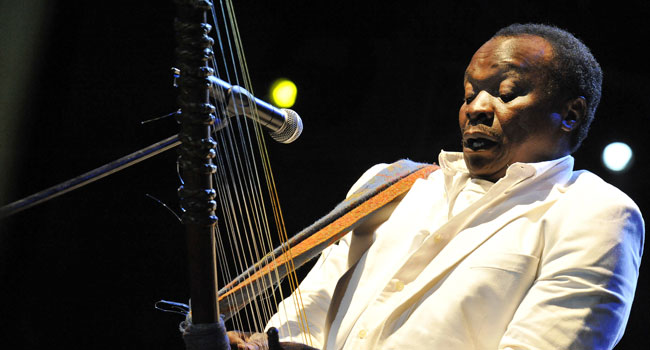
Mory Kanté (1950–2020) was a Guinean singer, songwriter and musician, known worldwide for his hit ‘Yéké Yéké’, which became a global sensation in the 1980s. Nicknamed the “Electric Griot”, Mory Kanté left his mark on African music by combining Mandinka musical traditions with modern sounds.
Childhood and early career
Mory Kanté was born on 29 March 1950 in Albadaria, in the Kissidougou region of Guinea, into a family of griots, the guardians of oral traditions in West Africa. From a young age, he was introduced to Mandinka music and traditions, learning to play the kora, an instrument emblematic of this culture.
At the age of 7, he was sent to Mali to continue his musical training, where he grew up surrounded by influential figures in Mandinka music.
Musical career
Early career
In the 1970s, Mory Kanté joined the legendary Malian group Rail Band de Bamako, where he played alongside the famous Salif Keïta. In 1973, Salif Keïta left the band, and Mory Kanté became the lead singer, bringing new energy to the group.
International Success
In the 1980s, Mory Kanté embarked on a solo career and turned to more modern sounds. His album *Akwaba Beach* (1987) featured the track “Yéké Yéké”, a blend of traditional Mandinka music and disco. This track became the first African hit to top the European charts, achieving massive international success.
“Yéké Yéké” was translated into several languages and sold millions of copies, marking an important milestone in the globalisation of African music.
Musical style
Mory Kanté is known for his skill in blending African musical traditions with modern styles such as pop, electro and disco. He is particularly famous for using traditional instruments such as the kora in contemporary compositions, which has earned him the nickname ‘Electric Griot’.
Awards and influence
Mory Kanté has received numerous awards for his contribution to music, including honours recognising his role in promoting Mandinka culture on the international stage. He is regarded as one of the African artists who paved the way for a new generation of internationally recognised African musicians.
Commitment
In addition to his musical career, Mory Kanté was a committed cultural ambassador. He worked on projects aimed at preserving African musical traditions whilst supporting social causes, particularly in his native country, Guinea.
Personal life and death
Mory Kanté was married and the father of several children. He spent much of his life travelling between Africa and Europe. He died on 22 May 2020 in Conakry, Guinea, aged 70, following health complications. His passing sparked a huge wave of sadness across the world.
Legacy
Mory Kanté remains an iconic figure in African music, and his hit ‘Yéké Yéké’ continues to inspire many artists. He is celebrated for his contribution to the global recognition of Manding music and for his role in the preservation and innovation of African culture.