
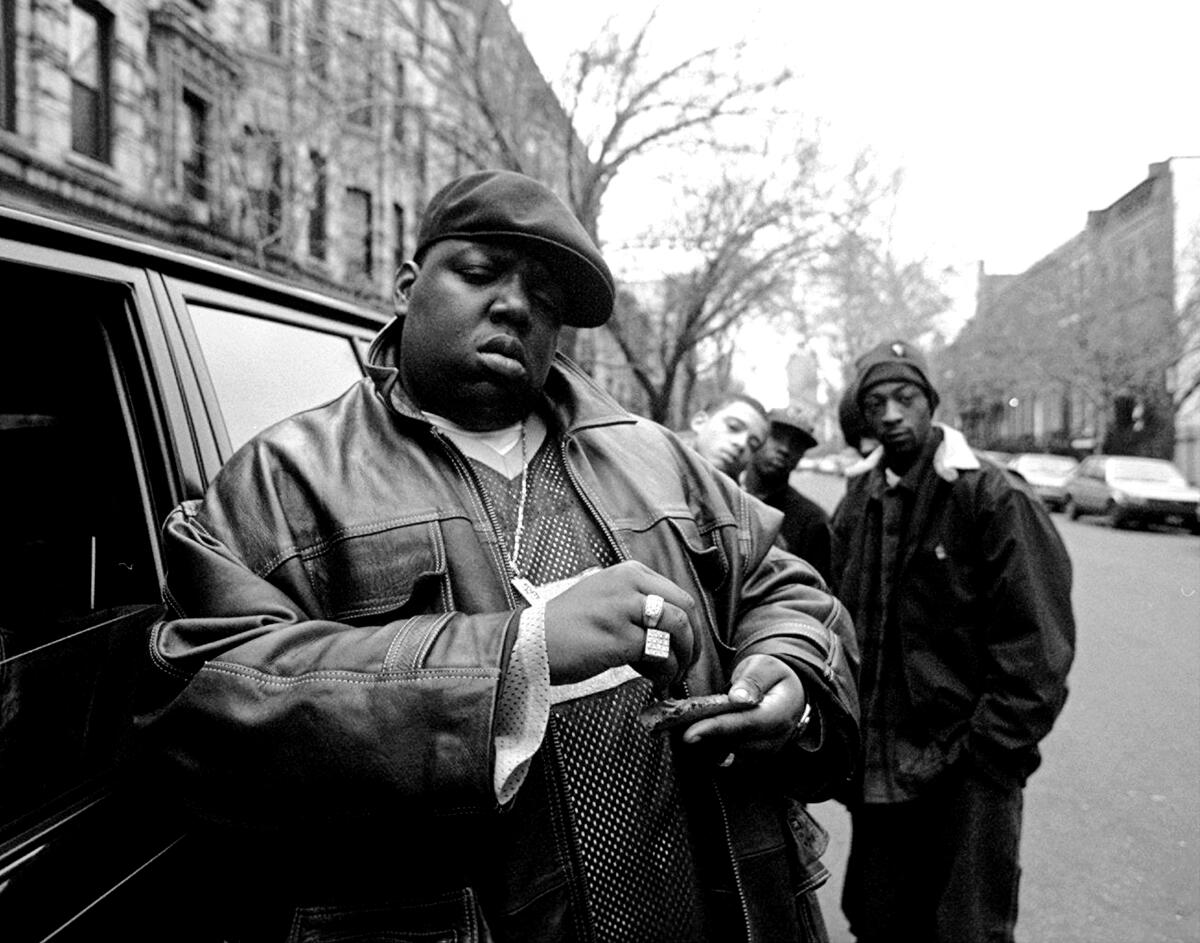
Biography
The Notorious B.I.G., also known by the nicknames Biggie Smalls or simply Biggie, is one of the most influential and iconic rappers in the history of hip-hop. His unique style, his storytelling ability and his impact on the music scene have made him a rap legend. Although his career was tragically cut short, his legacy lives on through his music and the influence he has had on countless artists.
Full name: Christopher George Latore Wallace
Nicknames: The Notorious B.I.G., Biggie Smalls, Big Poppa, Frank White
Date of birth: 21 May 1972
Date of death: 9 March 1997 (aged 24)
Place of origin: Brooklyn, New York, United States
Childhood and early life
Christopher Wallace was born in Brooklyn, New York, in a deprived neighbourhood. He grew up in a difficult environment, marked by poverty and violence. His mother, Voletta Wallace, was a Jamaican immigrant, and his father left the family when he was still a baby. Biggie was raised mainly by his mother in the Bedford-Stuyvesant neighbourhood. During his teenage years, Biggie became involved in criminal activities, notably drug dealing. However, he also had a passion for music and began rapping at a young age. His distinctive style and his ability to tell stories about his life on the streets, his struggles and the violence he faced quickly attracted attention.Discovery and debut album *Ready to Die* (1994)
The turning point in Biggie’s career came in 1992, when he began recording demos and making a name for himself on the New York hip-hop scene. He caught the eye of Sean “Puff Daddy” Combs, the founder of Bad Boy Records, who signed him. In 1994, Biggie released his debut album, *Ready to Die*, a groundbreaking project that would go on to make rap history. The album was a huge critical and commercial success, and it made Biggie a rap star. Tracks such as Juicy (which became an anthem of success), Big Poppa and One More Chance topped the charts and established Biggie as one of the central figures of East Coast rap. With *Ready to Die*, Biggie introduced a more narrative style of rap, in which his lyrics often told stories of the streets, violence, success and redemption. His ability to paint vivid and emotional pictures with his lyrics earned him immediate recognition.Rivalry with Tupac Shakur and the East Coast–West Coast feud
In the years that followed, Biggie became one of the key figures in the East Coast–West Coast rap feud, a highly publicised conflict between rappers from New York (the East Coast) and those from Los Angeles (the West Coast), particularly Tupac Shakur and his label, Death Row Records. This rivalry was fuelled by accusations from both sides, notably the 1994 shooting of Tupac in New York – an event that was misinterpreted and led to an escalation of tensions between the two camps. Despite the tensions, Biggie continued to dominate the charts with singles such as Hypnotize and Mo Money Mo Problems, which have become rap classics. In 1996, Biggie released *Life After Death*, a double album that was a huge success and is often regarded as one of his finest works.Album: *Life After Death* (1997)
His second album, *Life After Death*, released in March 1997, is often cited as one of the greatest albums in the history of hip-hop. This album marked a turning point in Biggie’s career, with tracks such as Hypnotize, Mo Money Mo Problems and Notorious Thugs (featuring Bone Thugs-N-Harmony), which cemented his place amongst the finest rap artists of his era. The album was released posthumously following his death and became a massive commercial success, reaching number one on the Billboard 200. It was also acclaimed for its musical diversity and collaborations with artists from different genres, demonstrating the extent of Biggie’s influence on popular music.Assassination and impact
On 9 March 1997, Biggie Smalls was killed in a shooting in Los Angeles. He was driving home after a night out at a club when he was shot by an unknown assailant. His murder, much like that of Tupac six months earlier, has remained shrouded in mystery and speculation. The circumstances surrounding his assassination have given rise to numerous theories and conspiracy theories, and the conflict between the East Coast and West Coast rap scenes has been widely blamed for his death.Musical style and influence
Biggie is often regarded as one of rap’s finest storytellers. His fluid flow and skilful use of words set him apart in a genre that often focused on rapid-fire rhymes and punchlines. His style was characterised by his deep, gravelly voice, his sometimes nonchalant delivery, and his rhymes full of detail and vivid imagery. His songs covered a variety of topics, ranging from street violence to the pleasures of celebrity life, as well as reflections on poverty and personal relationships. Biggie played a key role in the evolution of East Coast rap and helped shape the identity of 1990s hip-hop. His influence is still felt in contemporary music, and he is still cited as an inspiration by many artists.Major albums
- Ready to Die (1994)
- Life After Death (1997) (posthumous album)